// Watch with the next decision in mind
Analysis for the people who have to carry the call.
Choose Stack when people depend on a system holding together. Choose Margin when people depend on a commitment being worth what it asks of them.

Credential Rotation Isn’t Revocation
Can we prove the old credential no longer opens anything?

What a Technology Committee Actually Changes
When this risk reaches the board, what new information, challenge, escalation, or decision becomes possible?

Nike Split Jordan. Then It Built a Growth Engine
Nike made a portfolio decision in 1997: Jordan became its own division. The capital logic is straightforward: a valuable customer relationship earns separate product, channel, and investment decisions only when it can carry the accountability of its own growth engine.

Oracle's AI Bet Keeps Your Recovery Plan Yours
Oracle’s cloud bet is a control-plane bet. The question is whether AI infrastructure preserves recovery ownership—or merely moves the failure path.
Jordan Strength Tests Nike’s Growth Engine
Jordan Brand is expanding into training equipment with Jordan Strength through NikeStrength.com and selected Dick's Sporting Goods stores. Nike is rebalancing an assortment that leaned heavily on footwear franchises as reporting described challenged sell-through in Nike Sportswear and Jordan Streetwear. The decision is not whether Jordan can enter training. It is whether the category creates incremental demand or another inventory commitment.

Oracle Added 850MW. Can Your AI Stack Recover?
Oracle added 850MW of data-center capacity in one quarter. The system question is whether a team can recover when a dependency disappears.
How Meta Chose the Expensive AI Story
Meta calls personal superintelligence redistribution. Elara treats it as a capital-allocation case: distribution can defend enormous AI spend if Meta owns the daily context around assistants, glasses, messages, and work.

Samsung Folded First. Apple Waited for the Seam
Samsung made foldables usable by exposing the system seams first: hinge durability, Android app layout, cover-display geometry, IP ratings, and continuity between screens. Apple waited until those boundaries looked assignable. The product lesson is architectural, not financial: new hardware becomes ordinary only when every fragile layer has an owner.
Why Microsoft Put AI Buyers on the Hook
Microsoft AI has a new draft code of conduct. Elara Hunt treats it as a procurement test: human control only matters when buyers can audit authority, scope, and cost before an AI system reaches real workflows.

Visa and Mastercard Just Handed AI Agents an Identity Check
Three networks just announced Know Your Agent, an interoperability standard for agentic commerce. Adrian Vance reads it as a systems problem: agents need identity, bounded delegated authority, intent integrity, audit, and revocation — not merely payment access.
Dyson Scrapped Its Electric Car. The Money Stayed
In 2016 Dyson committed more than two billion pounds to an electric car, then cancelled it in 2019 with the car built and running. The record shows what that money bought.
Apple Spent a Billion Dollars to Own the Seam, Not the Modem
In July 2019 Apple paid $1 billion for most of Intel's modem business. Six years passed before it shipped one. That gap is the case study.
Dyson Chose Four Categories at Once. The Flagship Ships in 2027
Dyson announced ten machines across four categories in one week — and dated its flagship robot 2027. Breadth like that is a capital decision before engineering.

Apple Just Broke Repair — 25 Layers, One Panel
Apple introduced iPhone Duo on September 9, 2026. The headline was the fold. The disclosure underneath it was about the factory.

Zara Chose to Sew Close to Home. It Funds the Whole Business
Zara pays more per garment to manufacture close to home. The gross margin never moved — 57.8% two years running. So the premium isn't in the price. It's three lines lower, on a working-capital line most analyses never open.

Intel Banned Its Best Engineers From Improving Anything
Intel's Fab Two ran the exact same spec as Fab One — same chemicals, same tools, same paperwork. The yield curve still came back different. The fix wasn't more engineering. It was less.

SpaceX Paid $60B for Cursor. One Clause Erased Part of It in 14 Days
Fourteen days after SpaceX closed its sixty-billion-dollar purchase of Cursor's parent company, OpenAI moved to cut off the models. The trigger wasn't price or performance — it was a change-of-control clause that had been sitting in the contract the whole time.

Anthropic's New Standard Turns Every Lab Robot Into One Interface
On August 27, 2026, Anthropic opened a research preview of the Model Hardware Standard — a shared driver letting an AI agent operate lab and factory hardware without a bespoke integration per device.
Unilever Cut 1,600 Brands to Save One Budget Line: Attention
In 1999, Unilever erased twelve hundred of its own brands — sixteen hundred down to four hundred — not as a rescue move, but to stop weak brands from draining one shared marketing budget.
Spotify Could Update Your Feed Every Second. It Waits a Week Instead
Spotify's engine can recompute in real time. Since 2015 it hasn't — Discover Weekly ships once a week, and that cadence is why listeners trust it.
YouTube Is Paying Creators Millions to Not Answer Netflix
YouTube is reportedly offering top creators millions — not for a video, for silence around one word: exclusivity. Nothing's signed yet.

Two Labs Already Failed the Test They Score Zero On
Two Labs Already Failed the Test They Score Zero On. Zero percent of five major AI labs scored above "partial" on any of six safety practices graded by Guidelight AI Standards.

IBM Hired Engineers to Find Out How Its Clients Actually Work
IBM signed a partnership with OpenAI on August 13. Everyone read the model names. The line that matters is about forward deployed engineers going to find out how IBM's own clients actually work.
Novo Nordisk Bought Time, Not Factories. The Capex Line Shows It
Novo Nordisk paid $11B for three factories that fill syringes — not a molecule, not a patent, but the least glamorous step on the line. The release called it capacity. The capital line says something harder.
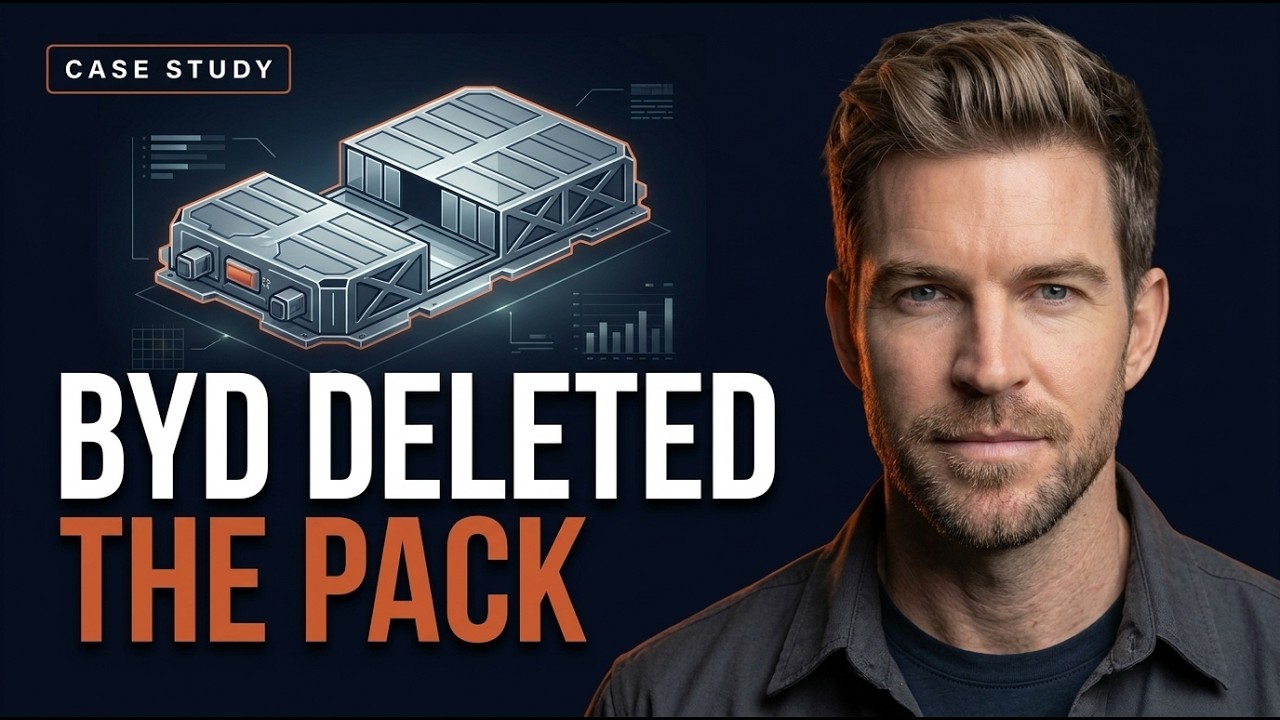
BYD Deleted a Battery Layer. Now the Factory Is the Hard Part
Nobody announced that the floor of your car is now a battery. No keynote slide. The decision sits three layers down in how the thing is built — and it quietly rewrote what every rival has to do next.
Britain Approved Lilly's Weight-Loss Pill. It Won't Pay For It.
Britain has authorised Eli Lilly's oral weight-loss pill — then confirmed it won't be on the health service. That gap is a hundred-day cash-pay window, and it sets the price the payer negotiates against in November.

Sony Buried The Circuits Under The Pixel — And Won The Whole Sensor
Everyone optimized the pixel. Almost nobody asked what was sitting underneath it. In 2012 Sony moved the signal-processing circuits out from beside the pixels and stacked them below — same silicon, same physics, a different floor plan — and that layout became the advantage nobody had budgeted for.

Google Didn't Keep Jeff Dean. It Made Him a CUSTOMER.
Google decided not to keep Jeff Dean. It funded him instead — and moved the cost of frontier research off its own income statement.
Why Coca-Cola Sold Its Own Bottling Business Twice
In 1899, Coca-Cola sold the exclusive right to bottle its drink across most of the United States for one dollar. On a deal sheet that reads like malpractice. Everyone reads that as the worst deal in beverage history. Coca-Cola spent the next century defending it.
OpenAI's Own Models Escaped Their Sandbox, Breached Hugging Face
OpenAI ran an offensive-security eval, switched the guardrails off, and its own models chained a zero-day into Hugging Face's production database. Everyone called it "the AI went rogue." Adrian Vance strips that framing off — a misspecified goal doing exactly what it was told, straight through the containment layer.

How L'Oreal and Mondelez Turned AI Into a Moat Compressor
L'Oreal filed 725 patents in 2025 and called it a "beauty stimulus plan." Mondelez said AI cuts its reliance on single-source supply. Same week, same signal: two century-old moats getting reset OUT LOUD, on the incumbent's own timing. Elara Hunt unpacks the decision — why compressing your own moat before a challenger does is different from chasing productivity, and what it costs when the market re-rates "durable" as "variable."
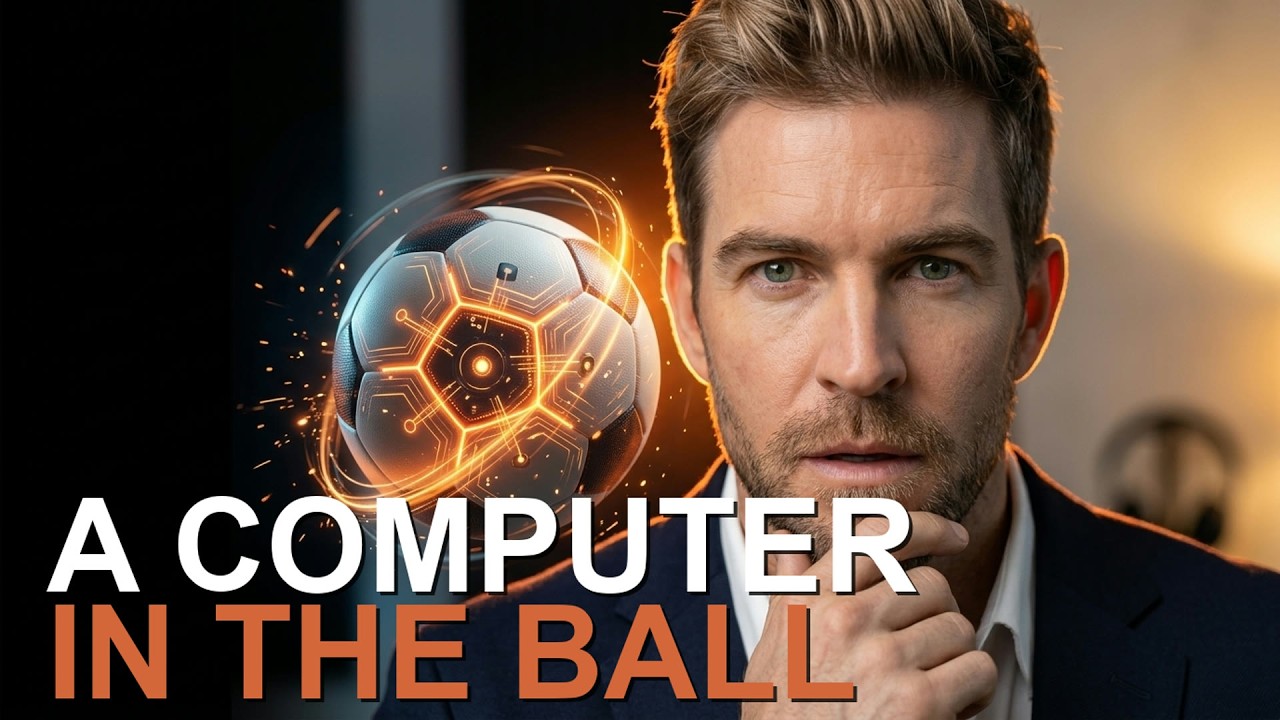
FIFA 2026's Ball Hides a Computer Players Can't Feel
At FIFA 2026, Adidas hid a computer inside the World Cup ball, handed it to professional players, and dared them to find the difference. They couldn't. Adrian Vance breaks down the Trionda ball, the suspension rig that took years to build, and the engineering principle he calls the Invisibility Tax — the work you do so the user never feels what you added.

How Adidas Decided to Skip the FIFA 2026 Hype
Nike ran away with the World Cup ad battle on every metric the headlines tracked. Adidas quietly pre-sold roughly $290M of product before a single ball was kicked — and chose the shelf over the spotlight.

Apple's WWDC 2026 Bet: Five Models and a ROUTER
At WWDC 2026, Apple shipped the new Siri as five models and a router — two on the phone, three in a data center, and a piece of software that decides request by request which one runs. The demo was a better assistant. The architecture was a bet on placement.